
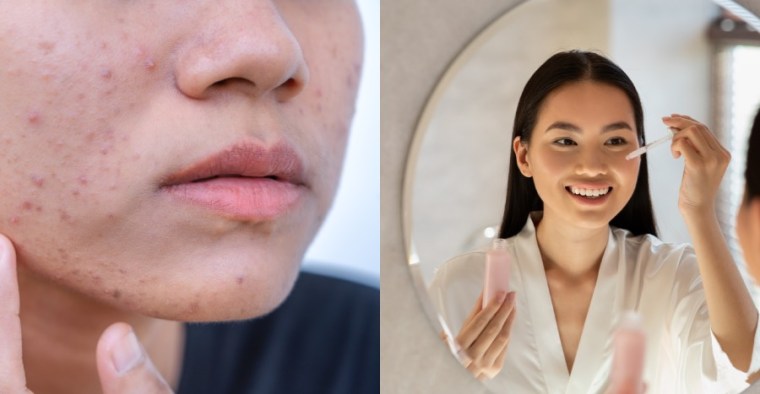
Layering skincare ingredients correctly is key to an effective routine. But, it can be overwhelming, especially for newbies.
With countless products on the shelves, it’s tricky to know which ingredients work well together. Not all skincare actives get along, and using the wrong combos can be a waste.
To help, we’ve created a guide on layering skincare ingredients the right way–so you can get the most out of your routine!
Alpha-hydroxy acids & beta-hydroxy acids (AHAs & BHAs)
Exfoliating acids such as AHAs and BHAs are used to slough off dead skin cells from the skin’s surface. While they’re all effective exfoliants that can improve your skin’s texture, tone, and blemishes, they can dehydrate and irritate the skin, so you shouldn’t layer them together.
You’ll also want to avoid layering this with hyaluronic acid, vitamin C, retinol, and benzoyl peroxide. Combining them with these actives may cause excessive skin sensitivity, irritation, and redness.
Here are some examples of AHAs:
- Citric acid
- Glycolic acid
- Lactic acid
- Malic acid
- Tartaric acid
And some examples of BHAs:
- Salicylic acid (or related substances, such as salicylate, sodium salicylate, and willow extract)
- Beta hydroxybutanoic acid
- Tropic acid
- Trethocanic acid
Related reads:
- Here’s what glycolic acid can do for your skin and the 15 best products to try today
- Here’s why you need salicylic acid in your skincare routine if you live in Malaysia
Alpha Arbutin
A skin-lightening ingredient, alpha arbutin is typically derived from plants like bearberries, blueberries, and cranberries. It works by targeting melanin-producing cells to fade stubborn hyperpigmentation.
While it’s generally safe to use on the skin, layering skincare ingredients with too many actives can irritate your complexion. Experts suggest pairing it with no more than two other active ingredients.
For an added brightening boost, we recommend combining it with spot-fading ingredients like vitamin C.
Related read: Alpha arbutin for skin: Benefits, functions, & review
Niacinamide

Source: Depositphotos
Both beauty experts and enthusiasts are likely to wax poetic about niacinamide. This water-soluble vitamin is known to visibly minimize the appearance of pores, reduce skin congestion, and calm active breakouts.
It also softens fine lines, evens out skin tone and texture, and fades dark spots—making it a holy grail for many.
When layering skincare ingredients, avoid mixing niacinamide with vitamin C, as they cancel each other out. You can still use both, but apply them at alternate times—vitamin C during the day for its UV protection boost and niacinamide at night.
Niacinamide can also be combined with zinc, copper, retinol, or folic acid to treat acne.
Vitamin C
Source: Depositphotos
Vitamin C is a powerhouse antioxidant that brightens your complexion by blocking the creation of excess pigment.
Besides that, it delays visible signs of ageing by stimulating collagen and protects your skin by neutralising free radicals from environmental aggressors. The result? Radiant, glowing skin that’s smooth and flawless.
While vitamin C plays nice with most skincare ingredients, make sure you don’t combine it with niacinamide, AHAs, BHAs, retinol, or benzoyl peroxide. As mentioned, niacinamide renders vitamin C useless, while the other ingredients can cause too much irritation when paired with vitamin C.
Related read: 17 best vitamin C serums that’ll brighten your skin and restore its glow
Retinol
One of the best skincare ingredients dermatologists love to recommend, retinol (a.k.a. vitamin A) promotes skin cell turnover. It helps improve the appearance of fine lines, wrinkles, uneven skin texture, dark spots, and acne.
The only catch? Retinol can be extremely irritating.
When layering skincare ingredients, avoid combining retinol with vitamin C, benzoyl peroxide, AHAs, or BHAs, as this mix can be harsh on the skin.
Instead, use retinol and other actives separately, apply vitamin C in the morning to boost SPF protection, and save retinol for your nighttime routine to work its magic while you sleep.
Benzoyl Peroxide

Source: Depositphotos
Benzoyl peroxide can be a true game-changer in your skincare routine if you have acne-prone skin. It kills acne-causing bacteria, removes excess oil to mattify the skin, and sloughs off dead skin cells to allow your serums and moisturisers to penetrate more easily.
The only caveat is that it can be incredibly drying, which is why combining them with other actives may not be a great idea. Steer clear of tretinoin, vitamin C, retinol, AHAs, or BHAs unless you intend to use these ingredients on different days.
Related read: How to use benzoyl peroxide and make it work for your anti-acne skincare routine
Hyaluronic Acid
Source: Depositphotos
Hyaluronic acid (a.k.a. HA) is a naturally occurring sugar produced by our skin cells that support our skin barrier function. It holds 1,000 times its weight in water, drawing in and holding onto moisture for hydrated, plumper skin.
You’ll be relieved to learn that hyaluronic acid goes with most other skincare ingredients. However, you’re still advised to avoid mixing it with acids with low pH values, such as AHAs, as it can cause irritation.
Tretinoin

Source: Depositphotos
Like retinol, tretinoin is a derivative of vitamin A. Tretinoin and retinol fall into the retinoid category, which means they’re great at treating acne and signs of ageing.
However, tretinoin is 20 times more potent than retinoid, so it works more effectively compared to over-the-counter retinol.
Because it’s so powerful, it’s best to avoid pairing or mixing it with other topical acne ingredients, such as benzoyl peroxide, resorcinol, salicylic acid, or sulfur.
Ceramides

Source: Depositphotos
The rise of barrier-building products has shone a spotlight on ceramides. They’re lipids (or fats) that are found naturally in high concentrations in the uppermost layers of our skin.
Ceramides essentially hold and bind our skin cells together, keeping the skin barrier strong and healthy. This way, you’ll reap moisturised, healthier skin.
This ingredient can be combined with a variety of other active ingredients, so you can go ahead and concoct your skincare cocktail!
Related read: 16 best ceramide moisturisers to lock in moisture and rebuild your skin’s barrier
Featured image credit: Karolina Grabowska & cottonbro
