

Wondering how to spot fake sunscreens? With counterfeit products flooding the market—especially online—it’s more important than ever to know what you’re putting on your skin.
While sunscreen is a must in every skincare routine, not all of them are the real deal, and some could end up doing more harm than good.
To shed light on the growing issue of fake sunscreens and how to protect yourself, we spoke to Dr. Ang Sue-May, Principal Consultant Dermatologist at Shine Dermatology. She shares key tips on identifying red flags and avoiding long-term skin damage.
Related Read: Shocking photos that prove sunscreen should be your new best friend
- Fake Sunscreens Are More Common Than We Think
- Why Counterfeit Sunscreens Have Become a Growing Concern
- The Real Damage Fake Sunscreens Can Cause to Your Skin
- Fake Sunscreens Can Still Carry SPF Labels and "Dermatologist Tested" Claims!
- Telltale Signs That a Sunscreen Might Be Counterfeit
- Online Skincare Shopping Comes With Higher Risk of Counterfeit Products
Fake Sunscreens Are More Common Than We Think
@drjuliansass This company may be selling a fake sunscreen… #skincare #spf #sunscreen #skincareproducts #skincarecommunity #beauty #sunscreenviral
“Unfortunately, it’s more common than most people realise,” says Dr. Ang Sue-May, Principal Consultant Dermatologist at Shine Dermatology. “Counterfeit sunscreens are frequently sold online through unauthorised third-party sellers and can even occasionally slip into high street stores.”
She also shared that “in regions with less regulatory oversight or during high-demand periods like summer or travel season, the risk of unknowingly buying a fake product increases significantly.”
“Studies and consumer watchdog reports have pointed to fake skincare and cosmetics as a growing global issue, particularly in markets across Asia, Africa, and parts of Europe.
Why Counterfeit Sunscreens Have Become a Growing Concern
Source: 3wclinicmy/TikTok
Dr. Ang outlines a few key reasons, including:
- High Demand: With growing awareness about skin cancer and sun protection, the market for sunscreens is booming, making it a lucrative target for counterfeiters.
- E-commerce Growth: The rise of online shopping platforms has made it easier for fake products to bypass traditional supply chain checks.
- Consumer Trust in SPF Labels: Many users don’t question SPF claims, assuming all products are regulated, which makes them vulnerable.
- Packaging Sophistication: Fake products now often mimic legitimate packaging very closely, making them hard to distinguish without lab testing.
The Real Damage Fake Sunscreens Can Cause to Your Skin

Source: Depositphotos
When you unknowingly use a fake sunscreen without real UV protection, your skin is left exposed to the full effects of the sun. Knowing how to spot fake sunscreens is crucial because, as Dr. Ang explains, “If a sunscreen lacks real UV filters (like zinc oxide, titanium dioxide, avobenzone), your skin is effectively unprotected.”
This can lead to:
- Immediate Skin Damage: Sunburn, redness, inflammation.
- Cellular Damage: UV radiation can harm DNA in skin cells, accelerating aging and increasing cancer risk.
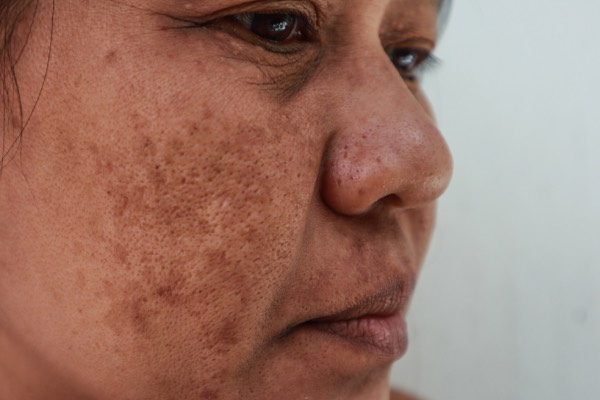
- Worsening of Skin Conditions: Those with melasma, hyperpigmentation, or rosacea may see flare-ups without proper UV protection.
Additionally, she also also shared that using “counterfeit sunscreens offer a false sense of security. Users often stay in the sun longer, believing they’re protected.”
Source: Depositphotos
Apart from it “leading to premature ageing”, this prolonged exposure can also cause issues such as:
- Increases the likelihood of sunburn and photoageing
- Can trigger hyperpigmentation in melanin-rich skin types
- Significantly raises the long-term risk of skin cancer, including melanoma, basal cell carcinoma, and squamous cell carcinoma.
Fake Sunscreens Can Still Carry SPF Labels and “Dermatologist Tested” Claims!
Source: Depositphotos
When asked about this, Dr. Ang gave a resounding “yes!”
“Counterfeit products often copy all branding elements, including, SPF numbers (sometimes absurdly high, like SPF 100+), terms like broad-spectrum, UVA/UVB protection, or “water-resistant “.
She warns that they may also include “seals or stamps such as dermatologist approved, clinically tested, or even fake “FDA” icons.” These claims are easy to print but not always verified by testing, especially in fake versions.
Telltale Signs That a Sunscreen Might Be Counterfeit
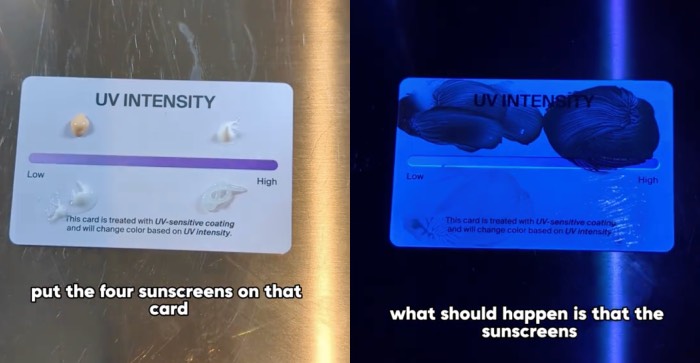
While you can get sunscreen test strips, Dr. Ang cautions that they’re “not always accurate” and can only give a rough idea of UV protection.
Source: drjuliansass/TikTok
Cosmetic scientist and TikToker @drjuliansass recently showed how these test strips work by using a UV light on a test card with four different sunscreens. Only two of them reacted as expected, suggesting those were likely the genuine ones.
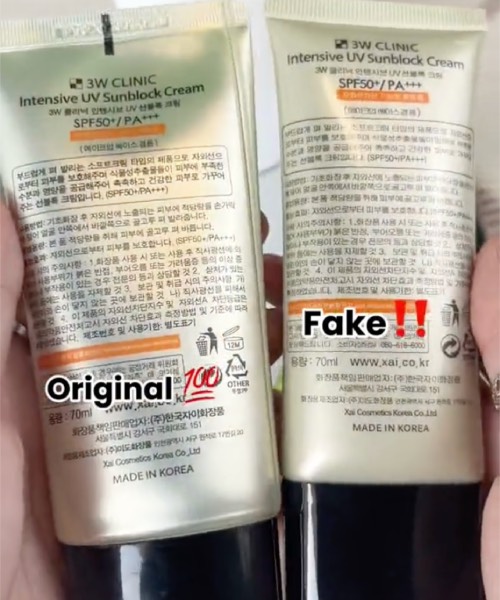
@3wclinicmy Hi #3wclinicfam 👋🏻 Jom tengok perbezaan Intensive UV Sunblock original vs fake. Pastikan korang beli yang original ya. Macam mana nak pastikan? Kalau tengok beg kuning, tengok shop tu account kami, boleh proceed ke check out ok 😝 #3wclinicmy #3wclinic #3wclinicsunscreen #3wclinicsunblock #racuntiktok #fyp #spf #sunblockfake #3wclinicsunblockoriginal
It’s not always easy to tell if a sunscreen is fake, but certain packaging details and seller behaviour can be red flags. If you’re wondering how to spot fake sunscreens, Dr. Ang highlights a few key signs to look out for:
- Scent: Often have a strong chemical smell
- Absorption: Poor absorption or residue left behind could mean the formula is not legitimate
- No Expiration Date or Batch Number: Legitimate sunscreens always include these details
- Texture: Fake sunscreens may feel runny, overly greasy, or gritty instead of smooth and uniform
- Odd Seller Source: Buying from unknown online vendors, social media ads, or street markets increases risk
- Unusual Packaging: Misspelled words, blurry fonts, misaligned logos, or strange colour schemes on the label
- Colour: An odd colour (e.g., yellowish, gray, or separated layers) is a sign of possible contamination or fakeness
- Sold at Suspiciously Low Prices: Extremely discounted items, especially from unknown sellers, are red flags
- Scan QR Codes or Batch Numbers: Some brands offer verification via their website or app. If you’ve previously purchased a genuine version, compare the packaging, scent, and texture to spot any inconsistencies
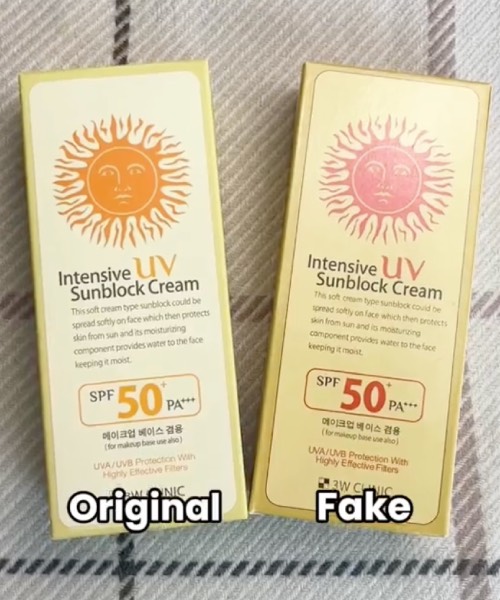
Source: 3wclinicmy/TikTok (difference in fonts)
If you suspect you’re using a fake sunscreen, her advice? “Trust your instincts. If something seems odd, it probably is.” And “stop using it right away, even if your skin hasn’t reacted, it may not be offering any UV protection.”
She also recommended to “report the product to your local health authority, like the HSA in Singapore and keep the packaging. It can help with investigations or refund claims.”
Online Skincare Shopping Comes With Higher Risk of Counterfeit Products
@heystetik.com fake SPF?😱😭 ⚠️UV CAM tidak bisa mengukur nilai SPF⚠️ mari kita tunggu klarifikasi dan uji lab dari brand tersebut. #heystetik #uvcam #sunscreen #fakespf #spf #edukasi #testuvcam #dokter #dokterkulit #dermatology
Dr. Ang admits, “a lot of people think that good reviews or familiar platforms mean a product is safe. But there’s very little awareness about how harmful fake skincare can be, especially sunscreens, which need to meet safety standards to be effective.”
She thinks there’s a growing need for better education, particularly now that online shopping is becoming more common.
Source: Depositphotos
“When you shop online, you can’t inspect the product before buying. Many third-party sellers aren’t rigorously vetted and low prices can tempt people into risky purchases.”
She notes that some sellers use deceptive branding and ship from unknown locations: “There’s no quality control, which makes it hard to trust what you’re getting.”
The best way to buy safe, authentic sunscreen is to “stick to reputable sources—pharmacies, official brand websites, and trusted department stores,” says Dr. Ang. “Avoid third-party sellers unless they’re verified by the brand.”
